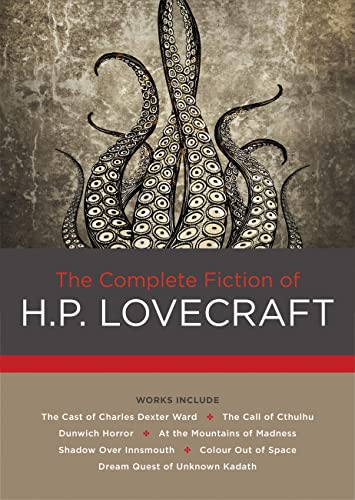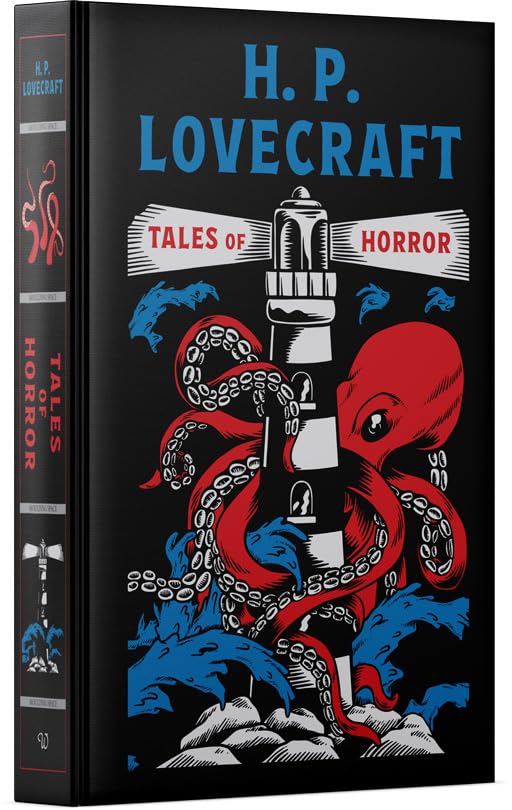
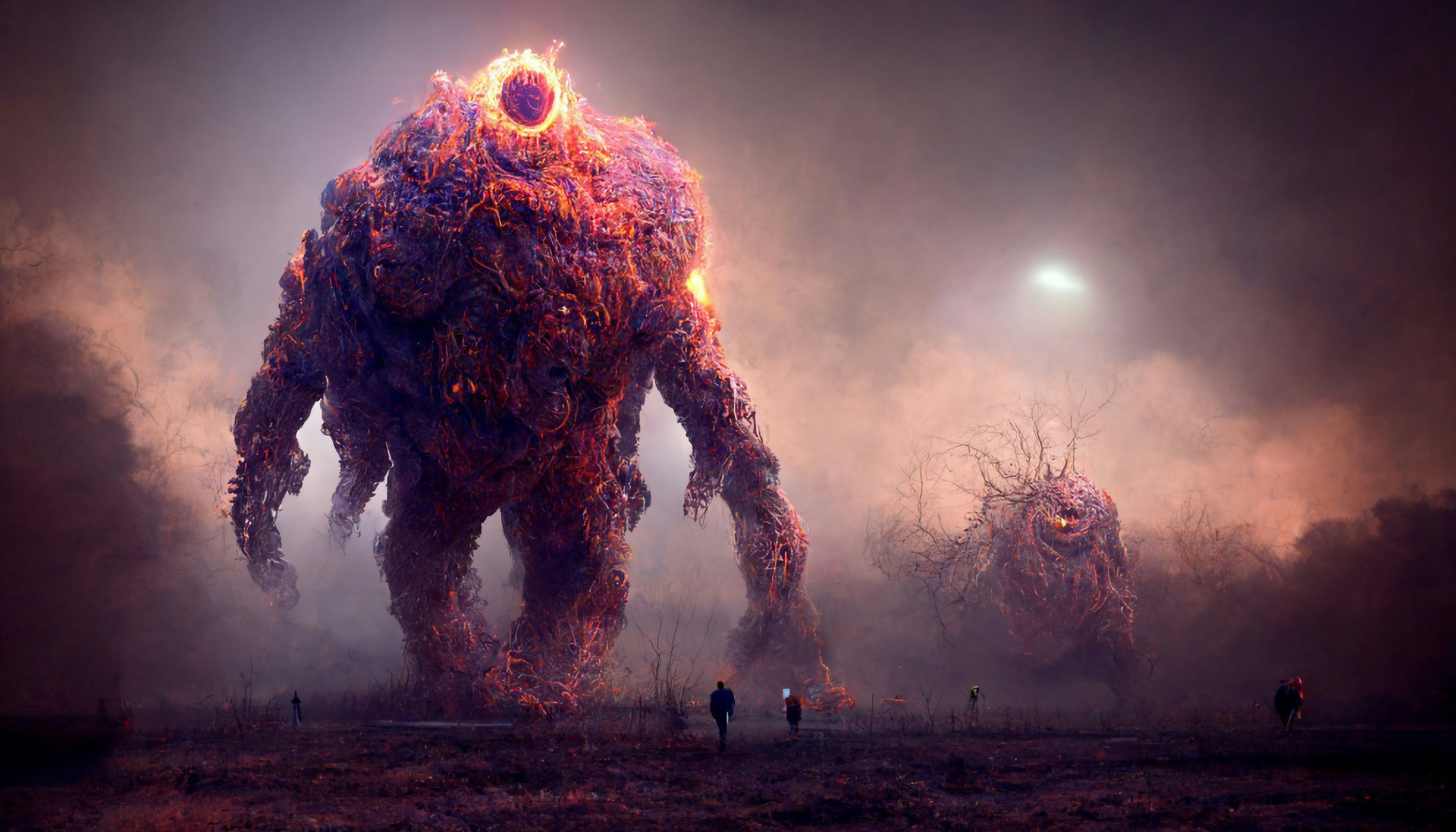
Introduction to Cosmic Horror
Cosmic horror is a subgenre of horror literature that delves into the themes of existential dread, the unknown, and the insignificance of humanity in the grand cosmic scheme. This genre was significantly popularized by writers such as H.P. Lovecraft, whose works often depict the terrifying confrontation between humanity and the unfathomable forces of the universe. At its core, cosmic horror explores the idea that the universe is an indifferent, vast expanse, filled with ancient entities and powers that are beyond human comprehension.
The characteristics of cosmic horror often include the use of existential themes that evoke feelings of hopelessness and despair. Protagonists in these narratives frequently grapple with their limited understanding of reality, leading to a profound sense of insignificance. As characters encounter ancient gods or otherworldly beings, they confront not just physical dangers, but fundamental questions about their place in the universe and the nature of existence itself.
Furthermore, cosmic horror emphasizes that humanity’s attempts to understand the universe are futile. This is exemplified in Lovecraft’s work, where knowledge often leads to madness rather than enlightenment. The genre invites readers to think about their own existence and the deeper questions regarding fate, destiny, and the very fabric of reality. Through this lens, cosmic horror serves as a critique of human hubris; it suggests that the human experience, while significant in our own narrative, is laughably inconsequential on a cosmic scale.
In essence, the central theme of cosmic horror lies in the confrontation with the unknown, challenging characters and readers alike to ponder the vastness of the universe and their place within it. As we continue to explore this intriguing genre, we will further reveal its lasting impact on literature and culture.
H.P. Lovecraft: The Master of Cosmic Horror
H.P. Lovecraft, born in 1890 in Providence, Rhode Island, is widely regarded as the preeminent figure within the realm of cosmic horror. His unique blend of horror and science fiction actively challenges human understanding of the universe. Lovecraft’s life was marked by challenges, including personal tragedies and struggles with mental health, which fueled his creative output. His writings offer a deep, unsettling insight into humanity’s place in an unfathomable cosmos.
Lovecraft’s literary style is characterized by an intricate vocabulary and a gothic atmosphere, often evoking dread and a sense of helplessness. His prose is composed of richly detailed descriptions that capture the terror of the unknown. Notably, he invented a mythos that extends beyond simple monsters; instead, his narratives often delve into themes of insignificance and the fragility of sanity when confronted with cosmic entities. These entities, such as the infamous Cthulhu, embody the existential fears of mankind.
Recurring motifs in Lovecraft’s works include the insignificance of humanity, the vastness of the universe, and the fragility of sanity. His stories often feature protagonists who encounter ancient and powerful beings, leading to their eventual madness. This motif serves to emphasize the theme of cosmic horror: the realization that humanity is just a small part of a far more extensive and indifferent universe.
Lovecraft’s influence extends far beyond his lifetime, with numerous authors and filmmakers drawing inspiration from his unique vision. Modern horror continues to reflect his themes and stylistic choices, establishing Lovecraft as an enduring figure in the genre. The complexities of his work and the depth of his philosophical insights have left an indelible mark, solidifying his status as the master of cosmic horror.
Understanding ‘The Call of Cthulhu’
‘The Call of Cthulhu,’ penned by H.P. Lovecraft in 1928, is a seminal work that catalyzed the genre of cosmic horror. The narrative unfolds through multiple perspectives, primarily conveyed by the unnamed protagonist who uncovers a chilling account about an ancient cosmic entity known as Cthulhu. This being, described as resembling an immense creature with octopus-like features, symbolizes the terror of the unknown and humanity’s puny existence within the vast cosmos.
The plot is segmented into three distinct parts: “The Horror from the Sea,” “The Tale of Inspector Legrasse,” and “The Madness from the Sea.” Each segment builds upon the concept of hidden knowledge that unravels the fragile mental state of those who dare to confront it. The protagonist’s investigation leads him to a bizarre cult that venerates Cthulhu and revels in chaotic madness, highlighting themes inherent in Lovecraft’s work, such as the insignificance of humanity and the thin veil separating sanity from insanity.
One of the most compelling themes in ‘The Call of Cthulhu’ is the notion of fear—a profound dread rooted in the incomprehensible. Lovecraft skillfully casts doubt on the reliability of human perception, suggesting that true understanding lies beyond the limits of human cognition. Madness is portrayed not merely as a personal struggle but as a collective experience that unravels those who confront the truth about their existence. Cthulhu serves as the embodiment of this cosmic fear, challenging the characters and, symbolically, the readers to confront the unsettling possibilities of what lies beyond their understanding of reality.
In this rich tapestry of cosmic horror, Lovecraft crafts a narrative that transcends its era, continuing to influence countless authors and artists. The complexity of its themes and the enduring legacy of Cthulhu in popular culture reflect the timeless impact of Lovecraft’s vision, securing ‘The Call of Cthulhu’ as a cornerstone of horror literature.
Thematic Elements of Cosmic Horror in Lovecraft’s Work
The works of H.P. Lovecraft are quintessential to the cosmic horror genre, intricately woven with thematic elements that evoke a profound sense of dread and existential contemplation. At the heart of Lovecraft’s narrative style lies the concept of the unknown. The unknown in his stories often manifests as ancient deities, such as Cthulhu, whose very existence challenges human understanding. This theme propels the narrative, suggesting that there are vast, incomprehensible forces at play in the universe, far beyond human control and knowledge. The elusiveness of truth becomes a central motif, as characters often encounter revelations that shatter their perception of reality.
Another significant element is the exploration of existential dread. Lovecraft’s characters frequently confront the stark realization of their own insignificance in the grand cosmos. The meditative reflection on humanity’s place in the universe breeds a profound fear, encapsulated in the idea that mankind is but a fleeting speck amidst the ancient and powerful beings that inhabit the cosmos. This realization fosters a sense of hopelessness and despair, making readers ponder the fragility of existence.
Additionally, Lovecraft’s incorporation of non-Euclidean geometry serves to augment the feelings of disorientation and alienation. His settings often defy traditional spatial logic, creating an unsettling atmosphere that mirrors the chaotic nature of the cosmos. Such physical representations are not merely aesthetic; instead, they embody the psychological disarray faced by characters who grapple with the enigmatic realities that overshadow their lives.
In conclusion, the thematic elements in Lovecraft’s work, notably the unknown, existential dread, and the distortion of reality, form the backbone of his cosmic horror narrative. Through these motifs, he invites readers to confront the inherent uncertainties of existence and the daunting vastness of the universe that surrounds us.
Cthulhu Mythos: An Expanding Universe
The Cthulhu Mythos, conceived by H.P. Lovecraft, represents a complex universe that incorporates elements of horror, science fiction, and fantasy. This interconnected framework consists of eldritch deities, ancient civilizations, and incomprehensible cosmic horrors, creating a rich tapestry that has captivated the imaginations of writers and artists alike. Lovecraft’s Cthulhu itself is arguably the most iconic figure within this realm, a colossal entity that lurks beneath the Pacific Ocean, embodying humanity’s insignificance in an unfathomable universe.
Beyond Lovecraft’s original works, the Mythos has grown exponentially, with contributions from various authors who sought to expand and reinterpret his themes. Noteworthy figures such as August Derleth, Ramsey Campbell, and Brian Lumley have introduced new characters, settings, and narratives that enhance the scope of this literary universe. Derleth, for example, emphasized the moral dichotomy between good and evil, introducing the concept of “The Elder Gods,” which paved the way for conflicts within the Mythos that were not explicitly defined in Lovecraft’s own writings.
Moreover, the influence of the Cthulhu Mythos extends to other media, including film, video games, and tabletop role-playing games. The themes of cosmic horror are adeptly conveyed through various art forms, showcasing a collective fear of the unknown. Artists such as H.R. Giger and filmmakers like John Carpenter have drawn inspiration from Lovecraft’s ideas, further propagating the mythos. Additionally, the rise of modern adaptations reflects an ongoing fascination with existential dread and the concept of an indifferent universe.
As the Cthulhu Mythos continues to expand, it remains a significant influence on creators, challenging audiences to confront the terrifying notion that humanity may be but a fleeting spark in the vastness of an uncaring cosmos. This evolution not only enhances the narrative depth of the Mythos but also enriches the genre of cosmic horror as a whole.
The Influence of Cosmic Horror on Modern Media
The genre of cosmic horror, epitomized by the works of H.P. Lovecraft, has had a profound impact on contemporary media, reshaping the landscape of movies, video games, literature, and beyond. Lovecraft’s unique narrative style, rooted in the insignificance of humanity in the face of incomprehensible cosmic entities, continues to inspire creators who seek to explore existential dread and the unknown.
In film, directors such as Guillermo del Toro and Ari Aster have drawn heavily from Lovecraftian themes. Del Toro’s “The Shape of Water” and Aster’s “Hereditary” illustrate a fascination with the otherworldly, mirroring Lovecraft’s narratives where the boundaries of reality blur with the surreal. Moreover, the horror film “Color Out of Space” directly adapts Lovecraft’s stories, highlighting the adaptable nature of his cosmic horrors while integrating modern cinematic techniques.
The realm of video games has also embraced cosmic horror. Titles like “Bloodborne” and “Darkest Dungeon” seamlessly weave Lovecraftian elements into their game mechanics and narratives. In “Bloodborne,” players face eldritch beings and must decode the arcane mysteries that govern their universe, reflecting Lovecraft’s themes of forbidden knowledge and the perils of exploration. Similarly, “Darkest Dungeon” utilizes the madness motif, illustrating the psychological strain faced by characters as they contend with forces beyond their understanding.
Literature has not escaped the clutches of this chilling genre either. Contemporary authors such as Caitlín R. Kiernan and Laird Barron imbue their tales with Lovecraftian motifs, subtly exploring themes of cosmic insignificance and the ever-looming threat of the unknown. Through intricate storytelling, these writers breathe new life into cosmic horror, showcasing its relevance and adaptability in modern contexts.
In essence, the aesthetic and philosophical tenets of cosmic horror resonate powerfully within today’s cultural narrative. Modern interpretations not only preserve the core ideas established by Lovecraft but also expand upon them, ensuring that the unsettling allure of cosmic horror remains prevalent in contemporary media.
Criticism of Lovecraft’s Cosmic Horror
H.P. Lovecraft, renowned for his unique contribution to the genre of cosmic horror, has faced substantial criticism throughout the decades. Central to this critique are his troubling views on race and the pervasive influence of his personal beliefs within his narratives. Critics have pointed out that Lovecraft’s horror stems not only from the fear of the unknown but also from a worldview that is often considered xenophobic and elitist. This aspect casts a shadow over his works, prompting discussions about whether his contributions can be appreciated independently of his controversial ideologies.
Many argue that Lovecraft’s cosmic horror, which dwells on themes of insignificance in the face of vast, incomprehensible cosmic forces, is marred by a disdain for cultures and peoples he perceived as different. His frequent use of derogatory language and stereotypical portrayals highlight a prejudice that contradicts the universal themes of fear and existential dread present in his stories. This duality presents a complex challenge: how to reconcile the profound influence of Lovecraft’s works with the problematic aspects of his viewpoints.
The literary community continues to grapple with this dichotomy, as Lovecraft’s innovations in horror literature are both celebrated and critiqued. Scholars suggest that it is crucial to contextualize his views within the time period, acknowledging that while they reflect the prejudices of his era, they do not excuse them. This ongoing conversation reinforces the notion that Lovecraft’s legacy is not merely about creating a genre but also about confronting the uncomfortable realities of his perspectives. By addressing these critical viewpoints, readers and scholars alike can engage with Lovecraft’s work in a manner that acknowledges both its imaginative brilliance and its moral limitations.
The Evolution of Cosmic Horror Beyond Lovecraft
The cosmic horror genre has undergone significant evolution since the foundational works of H.P. Lovecraft, continually adapting to meet the sensibilities and expectations of contemporary audiences. Since Lovecraft’s heyday, new authors and filmmakers have emerged, infusing the genre with fresh perspectives and concepts that build upon his thematic groundwork.
Modern writers have expanded cosmic horror to explore complex societal themes and psychological dimensions that resonate more profoundly with current readers. For instance, authors like Caitlín R. Kiernan and Laird Barron have taken Lovecraftian elements and integrated them within rich character studies, focusing on the emotional and psychological impacts of existential dread. These writers crystallize the essence of cosmic horror, presenting it in ways that reflect contemporary anxieties such as technological disillusionment, ecological collapse, and the vast unknown of the cosmos.
Similarly, the evolution of cosmic horror has been prominent in visual storytelling through the medium of film. Directors like Jennifer Kent and Ari Aster showcase the genre’s potential to delve into the fragility of the human psyche when confronted with incomprehensible horrors. Movies such as “The Babadook” and “Hereditary” reframe the fear of the unknown not only as an external threat but also as an internal struggle, exploring deep-seated fears and family dynamics with a cosmic backdrop that amplifies their impact.
Moreover, the genre’s expansion into role-playing games and interactive media reflects its versatility. Titles like “Bloodborne” and “The Call of Cthulhu RPG” offer immersive experiences that allow players to engage actively with themes of cosmic uncertainty and existential despair. These developments reiterate how cosmic horror can transcend traditional narratives, enabling new storytelling forms that captivate a wider audience.
Conclusion: The Enduring Legacy of Cosmic Horror
The genre of cosmic horror, prominently exemplified by H.P. Lovecraft’s seminal work, continues to resonate across generations, captivating contemporary audiences with its unique exploration of the unknown and the insignificance of humanity in the vast universe. Lovecraft’s narratives, characterized by their existential dread and the incomprehensibility of ancient cosmic entities, have paved the way for a critical examination of societal fears, ethics, and the human condition.
In today’s world, where uncertainty prevails due to globalization, technology, and the precarious state of the natural environment, the themes of cosmic horror remain particularly relevant. Modern literature and film continue to draw from Lovecraftian motifs, reflecting the anxieties of contemporary society. The idea that there are forces beyond our understanding and control resonates strongly in an era marked by rapid change and existential questions about our collective future.
Cultural adaptations of cosmic horror are widespread, influencing not just literature, but also television, video games, and tabletop role-playing games. This cross-medium relevance bolsters the lasting impact of Lovecraft’s insights, as they invoke both fear and curiosity about the unknown. Emerging authors often integrate elements of cosmic horror, which reflects larger philosophical discussions surrounding humanity’s place in a potentially indifferent universe.
Moreover, the adaptability of cosmic horror themes allows them to evolve alongside societal concerns. Issues such as climate change, technology’s ethical implications, and global connectivity prompt a re-examination of the power dynamics inherent in cosmic horror narratives. As people grapple with these challenges, the genre provides a lens through which to engage with deep-seated anxieties, thereby affirming its significance.
Ultimately, the enduring legacy of cosmic horror is a testament to its power to invoke reflection on our existence. Lovecraft’s influence persists, reminding us that the exploration of the unknown is not merely a literary journey but a profound inquiry into the human experience.