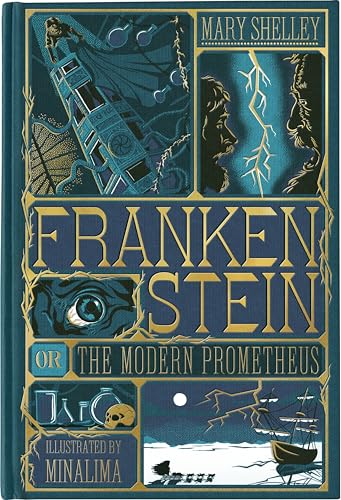

Introduction to Frankenstein
Published in 1818, Mary Shelley’s Frankenstein is often heralded as one of the earliest works of science fiction, serving as a cornerstone for the genre. The novel emerged from the Romantic period, a time characterized by an emphasis on emotion, nature, and the individual experience. Its birth can be attributed to a unique confluence of social, scientific, and literary influences, reflecting the anxieties and aspirations of a society in the throes of revolutionary change, both technologically and culturally.
Mary Shelley penned Frankenstein when she was just 18 years old, during a summer spent in Switzerland with literary figures such as Lord Byron and Percy Bysshe Shelley. This gathering of intellects and the discussions surrounding the nature of creation and ethics in science deeply inspired her. The creation of Victor Frankenstein’s monster serves as a poignant exploration of humanity’s relationship with science and nature, raising questions about the morality associated with playing God.
Upon its release, the novel received a mixed reception; some critics were captivated by its innovative themes, while others dismissed it as mere supernatural fiction. However, over time, Frankenstein evolved into a respected classic, influencing countless authors and filmmakers. Its themes of ambition, creation, and the quest for knowledge resonated with later generations, paving the way for modern science fiction. The novel not only showcases the potential horrors stemming from unchecked scientific exploration but also asks profound ethical questions about responsibility and the nature of existence.
As we delve deeper into the legacy of Frankenstein, it becomes clear that Mary Shelley’s groundbreaking work continues to inspire debate and exploration in both literature and science, solidifying its place in the canon of modern science fiction.
Mary Shelley’s Inspiration and Background
Mary Shelley, born Mary Wollstonecraft Godwin in 1797, was significantly shaped by her lineage and the surrounding cultural milieu. Her mother, Mary Wollstonecraft, was a renowned advocate of women’s rights and the author of “A Vindication of the Rights of Woman.” Her father, William Godwin, was a political philosopher and novelist whose ideas about individualism and morality deeply influenced Mary. Growing up in an intellectual environment, she was exposed to radical thoughts that would later permeate her work.
The Romantic era, characterized by an emphasis on emotion, nature, and individualism, provided a rich backdrop for Shelley’s literary endeavors. This cultural movement rejected the conventions of the Enlightenment, focusing on personal experience and the sublime aspects of human existence. Shelley’s participation in this intellectual wave allowed her to explore themes of creation, responsibility, and the human condition, which would manifest profoundly in her iconic novel, “Frankenstein.”
The summer of 1816 in Lake Geneva marked a turning point in Mary Shelley’s life and career. Accompanied by her partner Percy Bysshe Shelley and poet Lord Byron, the group found themselves confined indoors due to incessant rain. To amuse themselves, Byron suggested a ghost story challenge, which ignited Shelley’s imagination. The eerie atmosphere and the intellectual discussions she had during this period greatly impacted her writing process. It was during this fateful summer that she conceived the remarkable idea for “Frankenstein”—a narrative exploring the ramifications of scientific ambition and ethical concerns surrounding creation.
Thus, Mary Shelley’s upbringing, the Romantic ideals of her time, and the unique circumstances of that summer collectively fostered the innovative ideas that culminated in her groundbreaking novel. The legacy of “Frankenstein” continues to resonate, reflecting not only Shelley’s personal experiences but also broader societal questions regarding the limits of scientific exploration.
The Themes of Creation and Responsibility
In Mary Shelley’s novel “Frankenstein,” the exploration of creation is central to the narrative, serving as a profound commentary on the ethical responsibilities that accompany the act of bringing life into existence. Victor Frankenstein, a figure driven by insatiable curiosity and the pursuit of knowledge, transcends the boundaries of traditional science in his quest to create a living being from inanimate matter. However, this ambition leads to catastrophic consequences, exemplifying the perils associated with scientific overreach and the moral implications of playing God.
Victor’s fervent dream of unlocking the mysteries of life illustrates a classic theme within the literary genre of science fiction—the dangers inherent in unchecked scientific ambition. His initial excitement swiftly dissipates upon the realization of the monstrous consequences of his creation, highlighting Shelley’s warnings about the consequences of scientific hubris. The creature, initially an embodiment of Victor’s ambitions, becomes a tragic figure, illustrating the unintended ramifications that arise from Victor’s lack of foresight and responsibility.
As the narrative unfolds, Shelley invites readers to reflect on the relationship between creator and creation. Victor Frankenstein’s failure to consider the societal implications and his deep-seated responsibilities toward his creation results in a series of tragic events. The creature, rejected and ostracized due to its horrific appearance, embodies the suffering inflicted by neglect and abandonment. This serves as a poignant reminder that creators bear a moral obligation to their creations, emphasizing the need for ethics in scientific inquiry.
Thus, “Frankenstein” resonates deeply with contemporary discussions surrounding scientific ethics, illustrating the timeless relevance of Shelley’s cautionary tale. The themes of creation and responsibility convey necessary lessons on the moral dilemmas faced in the pursuit of knowledge, underscoring the importance of accountability in the pursuit of innovation.
Character Analysis: Victor Frankenstein and the Creature
The narrative of Mary Shelley’s Frankenstein intricately explores the psychological depth of its main characters—Victor Frankenstein and the Creature. Each character is portrayed with remarkable complexity, illustrating a profound connection that reveals themes of ambition, creation, and the quest for understanding. Victor Frankenstein, a brilliant yet obsessive scientist, becomes consumed by his desire to unlock the mysteries of life. This quest leads him to create the Creature, a being emblematic of both innovation and abhorrence. Victor’s motivations reflect a duality; he seeks greatness and glory through his scientific pursuits, yet this very ambition catalyzes a tragic downfall.
In stark contrast, the Creature embodies innocence and yearning for acceptance. Awakened to a world that shuns him based solely on his appearance, the Creature experiences profound isolation and rejection. His initial benevolence transforms into rage and desperation as he grapples with alienation from humanity. This transformation complicates the moral landscape of the narrative, positioning the Creature not merely as a monster but also as a victim of circumstance. The inherent conflict between creator and creation is marked by a tragic irony; Victor, who sought to transcend human limitations, ultimately regrets his decisions, leading to both his own demise and that of the Creature.
This relationship underscores essential themes of humanity and the consequences of blind ambition. Victor’s refusal to take responsibility for his creation reflects a failure of empathy, while the Creature’s subsequent quest for connection and validation illustrates the fundamental human need for belonging. Their tragic interplay serves as a cautionary tale about the ramifications of unbridled scientific exploration devoid of ethical considerations, resonating with contemporary discourses on innovation and morality.
Frankenstein’s Influence on Science Fiction
Mary Shelley’s iconic novel Frankenstein, published in 1818, forged a new literary path, giving rise to the genre of science fiction as we recognize it today. This seminal work not only encapsulated early explorations of scientific ethics and the consequences of human ambition but also established narrative and thematic tropes that would permeate the genre for centuries. The character of Victor Frankenstein, driven by a relentless pursuit of knowledge, embodies the archetype of the mad scientist—a figure often depicted in modern science fiction as someone whose obsessive quests lead to unforeseen repercussions.
The novel’s exploration of creation and monstrosity also paved the way for many science fiction narratives that delve into humanity’s relationship with technology and the moral dilemmas it presents. Themes of disconnection and alienation, illustrated through the creature’s tragic existence, resonate in works by subsequent authors. For instance, H.G. Wells, known for pioneering notions of time travel and alien encounters, draws on similar ethical questions regarding the role and responsibility of creators towards their creations, evident in titles like The War of the Worlds and The Time Machine.
Furthermore, Philip K. Dick’s intricate examinations of identity and reality can trace their roots back to Shelley’s exploration of what it means to be human. In his works, such as Do Androids Dream of Electric Sheep?, Dick challenges the parameters of existence and consciousness, akin to the existential dilemmas faced by Shelley’s creature. Overall, Frankenstein has undeniably shaped the landscape of science fiction, influencing countless writers and establishing foundational concepts that continue to inspire contemporary dialogues on science, technology, and ethics. Its legacy has solidified Shelley’s role as a crucial figure in the evolution of science fiction literature.
Philosophical and Ethical Implications
Mary Shelley’s “Frankenstein” delves into profound philosophical inquiries and ethical dilemmas that resonate with contemporary discourse. One of the central themes of the novel is the exploration of the responsibilities that accompany scientific discovery. Victor Frankenstein’s unrelenting pursuit of knowledge leads to the creation of a sentient being, raising questions about the ethical implications associated with ‘playing God.’ This incites discussions about the ethical boundaries in scientific exploration, particularly in fields such as genetic engineering, bioethics, and artificial intelligence.
Moreover, “Frankenstein” invites scrutiny of what constitutes humanity. The creature, despite its monstrous exterior, exhibits compassion and a yearning for companionship, prompting readers to reflect upon the essence of being human. This theme is particularly relevant in today’s discussions on personhood, especially related to advancements in AI, where the line between sentient and non-sentient beings is increasingly blurred. If we create entities that possess feelings or consciousness, what moral obligations do we hold toward them?
Additionally, Shelley’s narrative foreshadows the potential consequences of unchecked technological growth. Victor’s initial excitement transforms into horror as he acknowledges the repercussions of his actions, a cautionary tale applicable to modern technological endeavors. As society grapples with AI developments and genetic manipulation, the dread encapsulated in “Frankenstein” serves as a reminder that without ethical considerations, innovation can result in unforeseen dangers. The ethical frameworks guiding technological advancement today must address these concerns profoundly, ensuring that progress does not come at the expense of our moral values and humanity.
Cultural Adaptations and Legacy
The narrative of Mary Shelley’s “Frankenstein” has transcended its origins in literature, inspiring a vast array of cultural adaptations since its publication in 1818. The novel’s themes of creation, responsibility, and the nature of humanity resonate deeply within society, prompting reinterpretations across various media, including film, theater, literature, and visual arts. Each adaptation offers a unique lens through which to examine the underlying philosophical questions and social concerns that are as relevant today as they were over two centuries ago.
One of the earliest and most notable adaptations appeared in the form of the silent film “Frankenstein” (1910) by Thomas Edison. This film set the tone for future cinematic interpretations, most famously exemplified by the iconic 1931 film directed by James Whale. Whale’s version not only established the visual norm for the creature but also integrated the monster’s misunderstood nature, emphasizing the tragic consequences of isolation and societal rejection. Subsequent adaptations continued to explore these themes, reflecting changing societal values and advancements in technology.
In addition to films, the stage has also embraced Shelley’s work. Numerous theatrical productions have emerged, ranging from traditional interpretations to modern retellings that place the story in different contexts, thereby allowing fresh perspectives on moral and ethical dilemmas. The rise of contemporary reinterpretations often correlates with current societal debates, such as those surrounding scientific ethics and artificial intelligence, demonstrating the narrative’s adaptability and relevance.
The visual arts have also engaged with “Frankenstein,” inspiring countless artists who seek to capture the emotional and philosophical depths of the story. From intricate illustrations to modern multimedia installations, the creature has become a powerful symbol within artistic discourse.In conclusion, the legacy of Mary Shelley’s “Frankenstein” reveals itself through its rich tapestry of adaptations across various cultural platforms. Each iteration contributes to ongoing dialogues about humanity, innovation, and the consequences of transgressing natural boundaries, thus affirming the enduring relevance of this seminal work in the landscape of modern science fiction.
Modern Interpretations and Feminist Readings
Mary Shelley’s “Frankenstein” has long been a focal point for literary criticism, particularly in the exploration of gender roles and identity. The novel reflects societal norms of the early 19th century, but modern interpretations allow for a re-evaluation of its themes through various lenses, including feminist theory. By analyzing the character dynamics and narrative structure, contemporary critics argue that “Frankenstein” offers a profound commentary on the complexities of gender identity and the societal expectations imposed upon women.
One critical aspect of feminist readings of the text is the exploration of female agency. The female characters in “Frankenstein,” primarily Elizabeth Lavenza and Safie, can be interpreted as representing the limitations placed on women in a patriarchal society. Their experiences highlight the struggle for autonomy and voice, as they often fall victim to the ambitions and failures of the male characters. This analysis repositions Shelley’s work not just as a tale of ambition and monstrosity but as a narrative that critiques the societal constraints that confine women.
Moreover, examining Shelley’s own life and relationships provides deeper insight into her motivations and thematic choices. The loss of her mother and her tumultuous relationship with her father influenced the maternal themes evident in the text. Critics suggest that Victor Frankenstein’s abandonment of his creation parallels a father’s neglect, illuminating the text’s exploration of identity formation and the quest for belonging. Thus, Shelley not only presents a cautionary tale about unchecked scientific ambition, but also weaves in commentary on the maternal experience and the societal expectations surrounding motherhood.
By weaving these themes into modern feminist interpretations, readers can uncover a rich tapestry of meaning that challenges traditional analyses of “Frankenstein.” The novel’s enduring relevance stems from its ability to resonate with contemporary discussions surrounding gender, power, and identity, making it a vital text for feminist literary studies.
Conclusion: The Enduring Relevance of Frankenstein
Mary Shelley’s Frankenstein has not only stood the test of time as a prominent work of fiction but has also emerged as a critical reference point in contemporary discussions about science and ethics. The story of Victor Frankenstein and his tragic creation transcends mere narrative; it serves as a cautionary tale regarding the potential ramifications of unchecked scientific ambition. In an age where advancements in technology and biotechnology are accelerating at an unprecedented rate, the themes explored in this novel echo loudly in modern society.
One of the most pertinent aspects of Frankenstein is its exploration of the ethical dilemmas surrounding scientific experimentation. As the boundaries of genetic engineering and artificial intelligence expand, the moral questions raised by Shelley continue to resonate. Are scientists, like Victor, responsible for the outcomes of their creations? What ethical guidelines should govern the pursuit of knowledge? These inquiries are as relevant today as they were in the early 19th century when the novel was conceived.
Moreover, Frankenstein also delves into the repercussions of isolation and societal rejection, which remain significant in discussions about modern technology’s impact on human relationships. The creature, abandoned by his creator, embodies the fear of what can happen when innovations lack responsible stewardship. This narrative warns against the pursuit of scientific endeavors without consideration of their social implications.
In summary, the enduring relevance of Mary Shelley’s Frankenstein in the context of contemporary debates surrounding science and ethics reaffirms its status as a cornerstone of modern science fiction. As we navigate through new technological landscapes, Shelley’s insights into human ambition and responsibility remain a vital part of our collective consciousness, encouraging critical reflection on our choices in the face of innovation.